English
- English
-
 שפה עברית
-
 繁体中文
-
 Latviešu
-
 беларускі
-
 Hrvatski
-
 lugha ya Kiswahili
-
 አማርኛ
-
 ქართული
-
 Hausa
-
 Zulu
-
 Հայերեն
-
 Igbo
-
 Yoruba
-
 Español
-
 Português
-
 русский
-
 Français
-
 日本語
-
 Deutsch
-
 tiếng Việt
-
 Italiano
-
 Nederlands
-
 ภาษาไทย
-
 Polski
-
 Svenska
-
 magyar
-
 Malay
-
 Dansk
-
 Suomi
-
 हिन्दी
-
 Pilipino
-
 Türkçe
-
 العربية
-
 Indonesia
-
 Norsk
-
 český
-
 ελληνικά
-
 український
-
 فارسی
-
 български
-
 Қазақша
-
 Azərbaycan
-
 Slovenský jazyk
-
 Lietuvos
-
 Eesti Keel
-
 Română
-
 Slovenski
-
 Srpski језик
-
 한국어


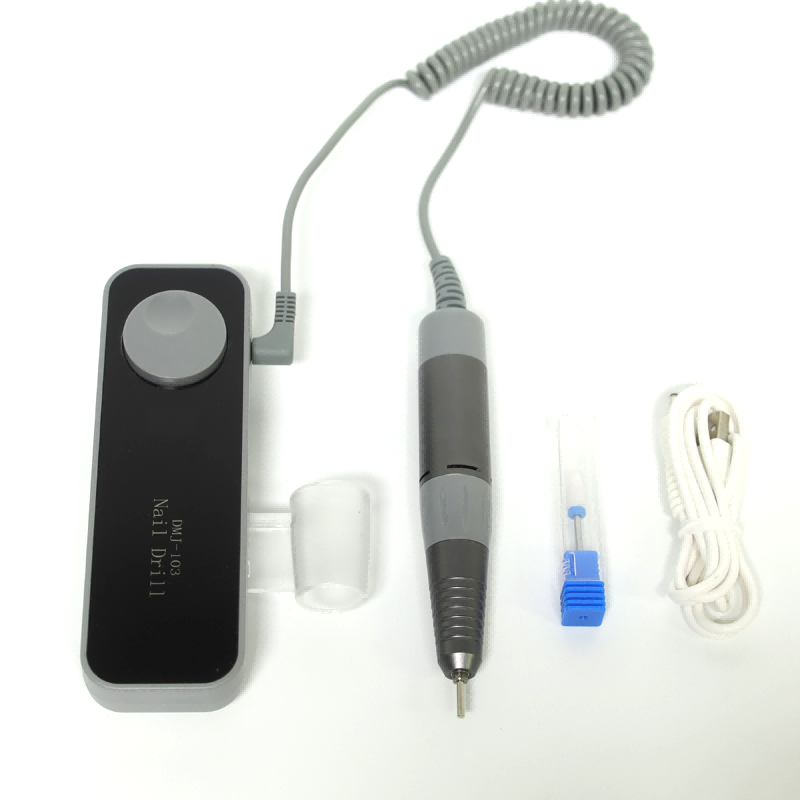
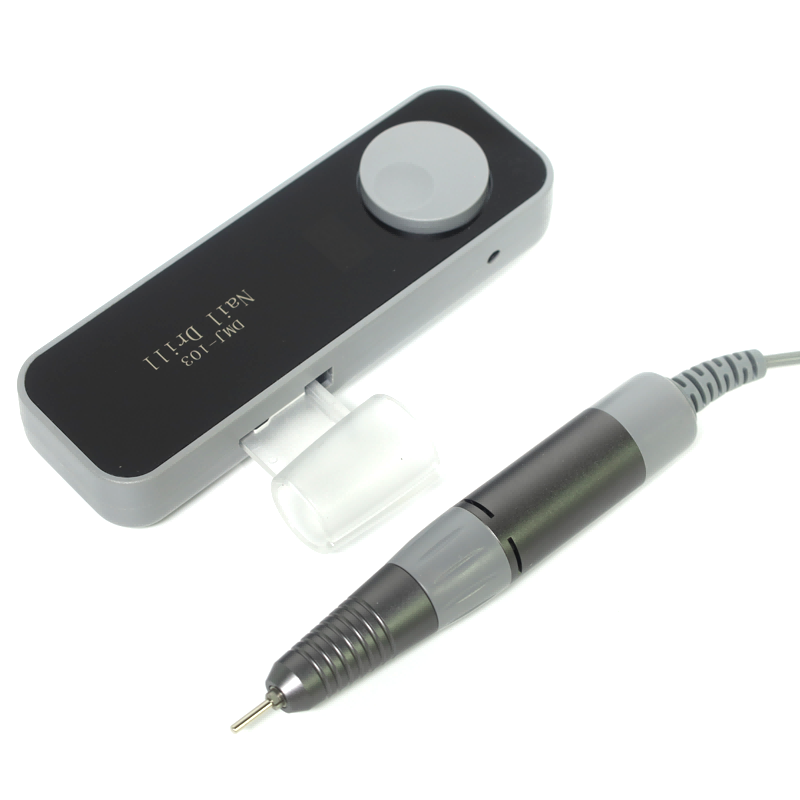
Cordless Electric Nail File Speed Control
The RUINA Cordless Electric Nail File Speed Control (Model DUJ-103) delivers salon-quality precision with a dedicated rotary knob and real-time LED digital feedback. Engineered for professional technicians, it features whisper-quiet operation, overload protection, and a rechargeable cordless build. Ideal for adapting seamlessly between delicate cuticle prep (8,000–15,000 RPM) and heavy acrylic removal (20,000–30,000 RPM). Available for bulk orders and private label distribution.
Send Inquiry
Product Description
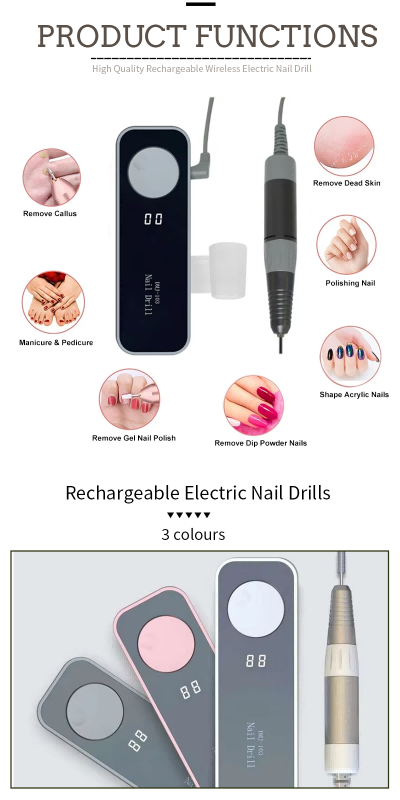
RUINA Cordless Electric Nail File Speed Control puts effortless salon-quality shaping in your hand. Adjustable speed, whisper-quiet motor, and a rechargeable cordless build make flawless nails simple anytime, anywhere.
Speed control is the single most consequential feature on a cordless electric nail file. It determines whether you can safely refine a cuticle without nicking the skin, or remove a hard gel overlay without generating excess heat.
A Professional's Guide to Choosing the Right RPM Range
The difference between a tool that feels responsive and one that feels like a blunt instrument almost always comes down to how the speed control is engineered—not just the maximum RPM printed on the box.
Precision at Your Fingertips
- Adjustable speed for delicate cuticle work
- High torque for removing hard gel overlays
- Whisper-quiet motor for client comfort
- Rechargeable cordless build for mobility
Engineered for Consistency
- Maintains RPM under load without bogging down
- Overload protection prevents motor burnout
- Real-time digital feedback on speed
- Balanced handpiece reduces vibration
The Three Speed Control Architectures You Will Encounter
Cordless electric nail files on the market today generally fall into one of three speed control categories. Understanding the distinction prevents you from paying for a feature set you do not need—or underpaying for one you do.
1. Preset Speed Levels (3-9 Gears)
The most common configuration in consumer-oriented files. You press a button to cycle through discrete speed steps. A nine-speed model reaching 35,000 RPM offers meaningful granularity, but jumps can feel coarse during delicate work. A three-speed model (max ~4,400 RPM) is beginner-friendly but offers little headroom for pro product removal.
2. Stepless Dial or Knob Control
A rotary dial allows infinitesimal adjustments across the entire RPM range. A brushless motor paired with 30-step stepless regulation provides a level of finesse that preset buttons cannot match—you can dial in exactly the intensity needed without overshooting. This mimics the continuous control of a traditional salon e-file.
3. Rotary Knob with Digital Feedback
A middle-ground solution that combines a physical rotary knob for adjustment with a clear LED display showing the precise speed. You get the tactile satisfaction of a dial plus the confirmation of a number.
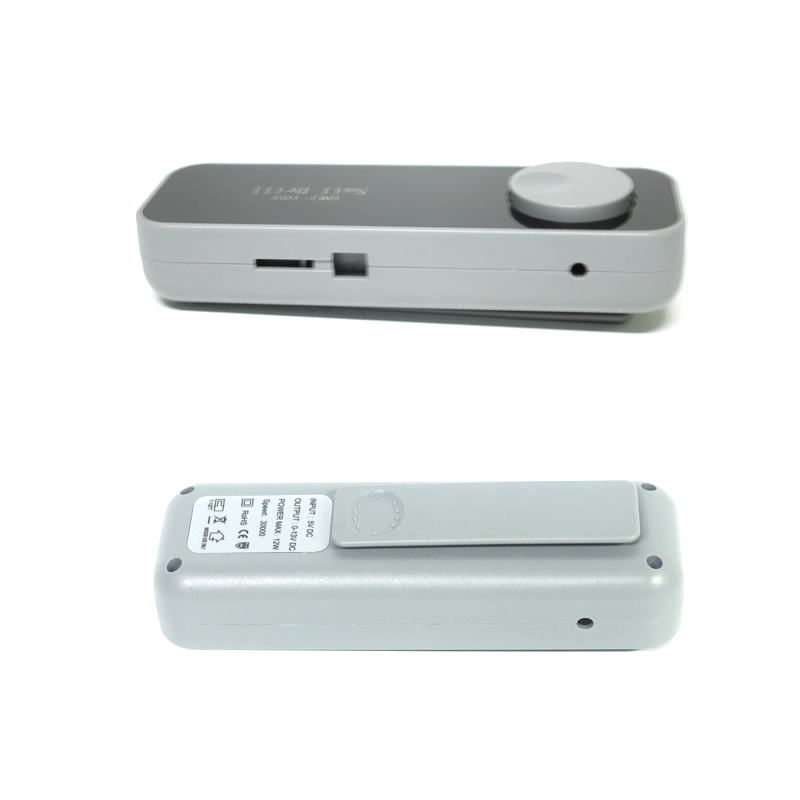
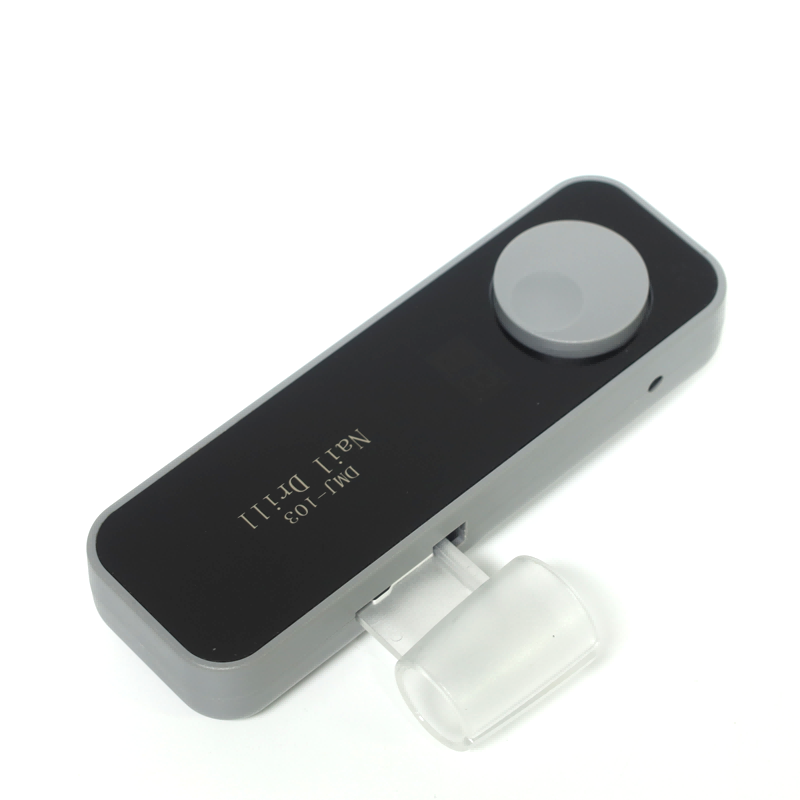
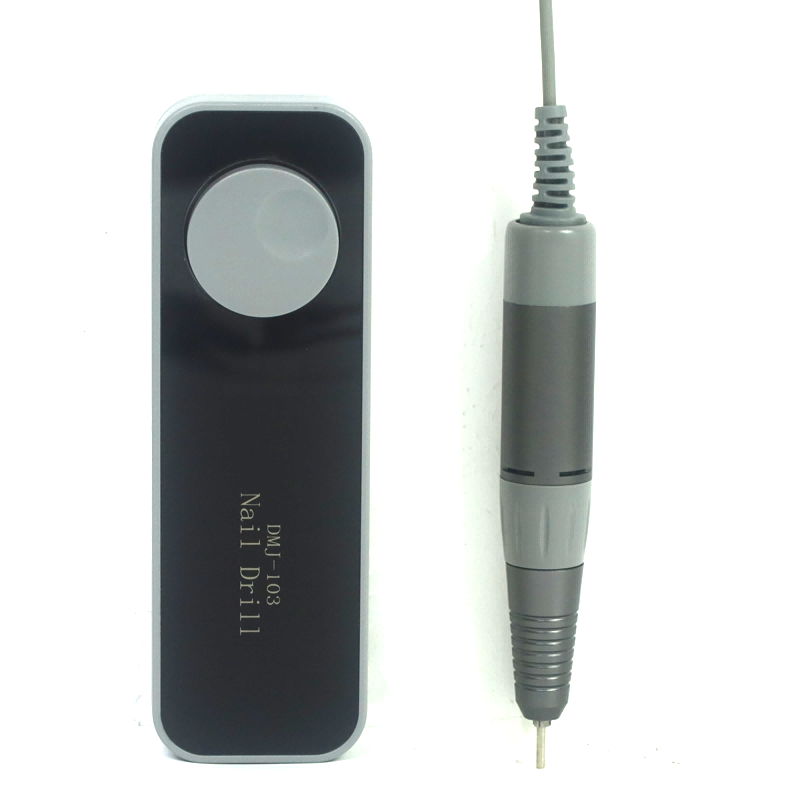
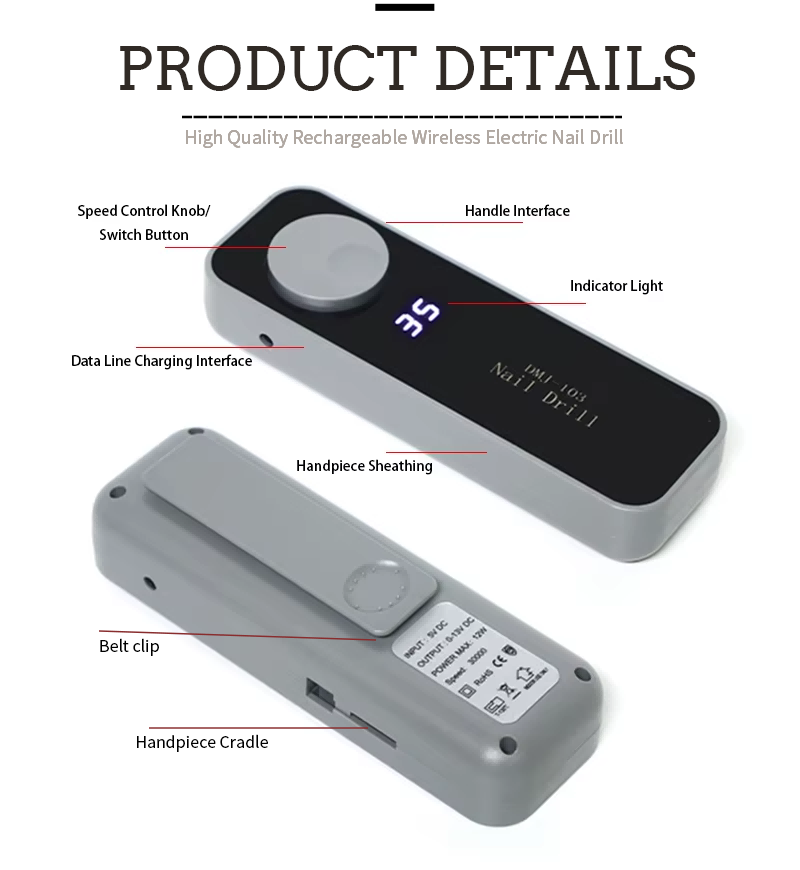
Product Anatomy and Interface
Matching Speed to Task: A Practical RPM Framework
The maximum RPM figure tells only half the story. What matters more is whether the motor holds its speed under load. Still, having a sensible ceiling helps you plan your workflow.
| Task | Recommended RPM Range | Rationale |
|---|---|---|
| Cuticle work & natural nail prep | 8,000 – 15,000 | Low speed prevents heat spikes and allows controlled feathering. |
| Gel polish removal | 15,000 – 25,000 | Enough torque to cut through, avoiding dwelling on one spot. |
| Acrylic or hard gel shaping | 20,000 – 30,000 | Higher RPM reduces friction per revolution, actually lowering heat transfer. |
| Backfill & surface refinement | 10,000 – 18,000 | Precision over power; stepless dial helps here. |
| Final polish & shine | 5,000 – 10,000 | Slow rotation with a soft bit prevents damage to the natural nail plate. |
A cordless file with a stepless dial lets you move seamlessly between these bands without cycling through unwanted intermediate gears. That fluidity separates a tool that supports your technique from one that interrupts it.
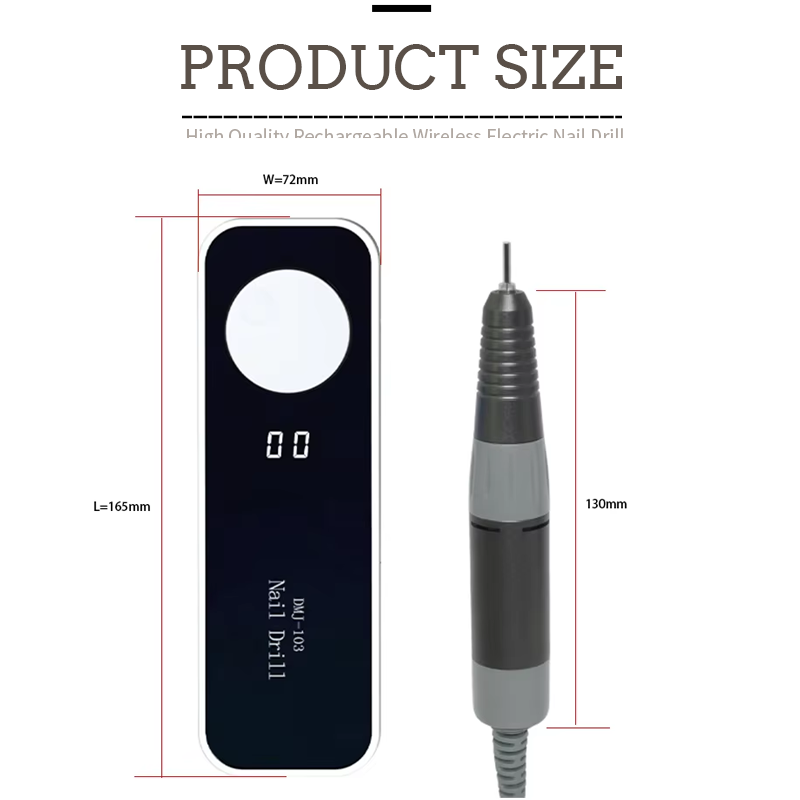
Dimensions & Ergonomic Scale
What the Spec Sheet Does Not Tell You
Overload Protection is Part of Speed Control
A drill that cuts power when resistance exceeds safe limits is not malfunctioning—it is protecting the motor and your client's nail. A light touch and a fresh bit prevent most false triggers.
Noise and Vibration Correlate with Quality
A drill that whines at 30,000 RPM is telling you something about its bearings. Brushless motors with aluminum alloy housings run quieter and cooler at equivalent speeds compared to brushed alternatives.
Battery Behavior Changes at the Top End
Runtime figures are almost always quoted at mid-range speeds. Running continuously at maximum RPM drains the cell faster. Plan charging breaks accordingly rather than trusting the headline number.
The Interface Matters Most
The most expensive file with the widest RPM range is useless if the speed control feels imprecise. Consider how you work: do you adjust speed constantly, or set a gear and leave it?
Frequently Asked Questions
Is stepless speed control actually better than preset gears for a beginner?
Not necessarily better, but different. Preset gears act as guardrails—you cannot accidentally dial into a dangerously high RPM while your attention is on the nail. A beginner who tends to press too hard or move too slowly will benefit from the discipline of discrete levels. Stepless control rewards users who have developed a feel for bit pressure and heat accumulation. If you are still building that feel, start with a multi-gear model and graduate to stepless once you can work through a full gel removal without needing to check the speed setting repeatedly.
My drill has nine speeds but the lowest setting still feels too aggressive for cuticle work. What should I do?
This is a common limitation of preset-gear designs. The lowest gear on some high-RPM drills is engineered for general filing, not precision cuticle detail. The practical workaround is to change the bit rather than the speed—switch to a finer, less aggressive bit and reduce hand pressure. If your drill supports forward and reverse rotation, check whether one direction produces a smoother cut at low speed. If the lowest gear remains unusable for delicate work, the tool is telling you it was designed for product removal and shaping, not for Russian manicure-style precision.
Does higher RPM mean faster product removal, or does it just generate more heat?
Faster removal comes from consistent torque and a sharp bit, not from raw RPM alone. In fact, running a dull bit at maximum speed is the fastest way to generate uncomfortable heat because the abrasive is not cutting efficiently—it is rubbing. A sharp bit at 20,000 RPM will remove gel polish more cleanly and with less heat buildup than a worn bit at 35,000 RPM. The correct approach is to match the speed to the product hardness and the bit's cutting efficiency, then let the abrasive do the work.
The speed display flickers or drops under load. Is the drill defective?
Not usually. Some cordless models display real-time RPM, and a momentary dip under pressure is normal motor behavior as the control circuit compensates for resistance. What matters is whether the speed recovers once you ease off. If the display drops sharply and the motor stalls repeatedly during normal use, check three things: the bit is fully seated and the collet is tight, you are not applying excessive lateral pressure, and the battery is not in its final depletion phase. Overload protection circuits are designed to intervene before damage occurs.
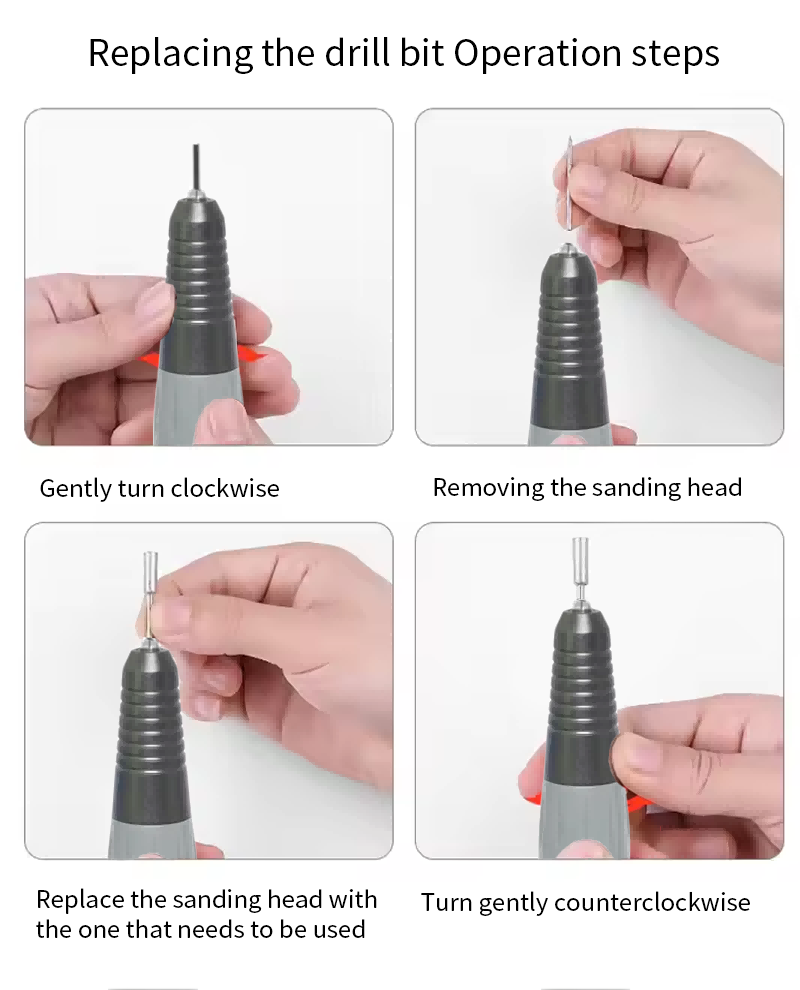
How to Replace the Drill Bit
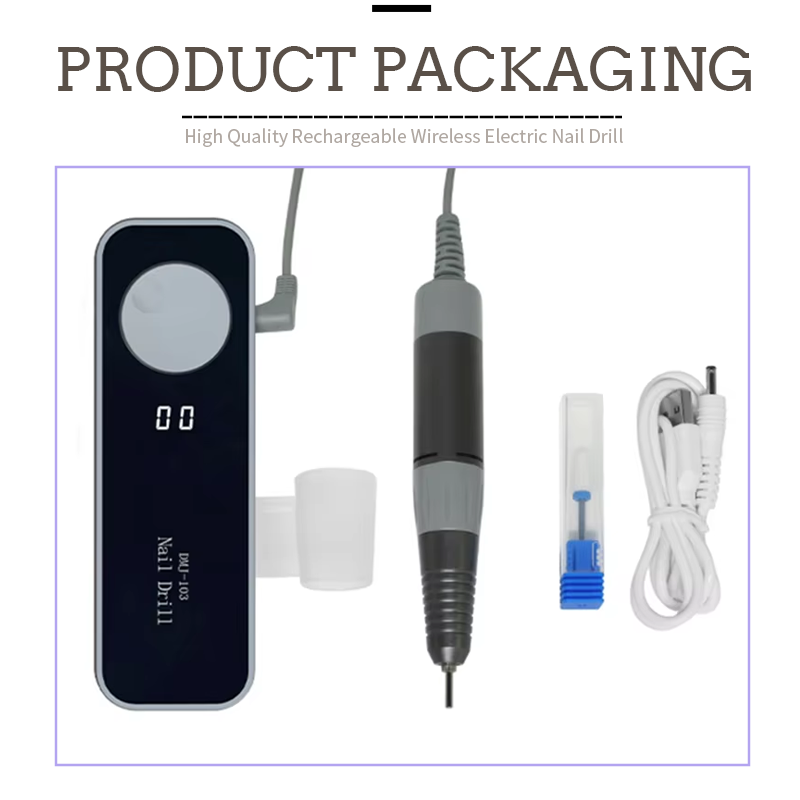
What's in the Box
Bulk Orders, OEM and Distributor Pricing
Factory-direct supply for salon chains, beauty distributors and private-label programs. Request a variant sheet, MOQ schedule and lead-time confirmation for the Cordless Electric Nail File Speed Control.
Request a QuoteRelated Equipment for a Complete Station
Professional Electric Nail Drill Manicure Pedicure KitHigh-torque corded station unit for heavy acrylic work Cordless Rechargeable Nail Grinder Polishing Machine SetLong-runtime brushless option for mobile service Adjustable Speed Nail Drill Bits Sanding Bands SetGrit-matched consumables for every stage of the service Portable High Speed Nail File Professional Salon ToolHigher RPM ceiling for full-set acrylic reduction High-Temperature Sterilizer with Adjustable TemperatureDry-heat sterilization for bits between clients
Hot Tags: Discover the RUINA Cordless Electric Nail File Speed Control (DUJ-103). Featuring stepless RPM adjustment, LED digital feedback, and overload protection for precise manicures. Bulk orders, OEM & distributor pricing available.
Related Categories
Send Inquiry
Please feel free to fill your inquiry in the form below. We will reply you in 24 hours.
Related Products
 Nail Drill Set Electric To Remove Gel Polish 65w 35000rpm
 Nail Drill Set Electric File Professional 65w 35000rpm
 Necessary Nail Drill Set Electric 65w 35000rpm
 Nail Drill Set Electric To Remove Dip 65w 35000rpm
 Portable Nail Drill Set Electric With Powerful Motor 65w 35000rpm
 Nail Drill Electric Not Easy To Damage Handpiece 65w 35000rpm



X
We use cookies to offer you a better browsing experience, analyze site traffic and personalize content. By using this site, you agree to our use of cookies.
Privacy Policy