English
- English
-
 שפה עברית
 -
 繁体中文
繁体中文 -
 Latviešu
 -
 беларускі
 -
 Hrvatski
 -
 lugha ya Kiswahili
 -
 አማርኛ
አማርኛ -
 ქართული
 -
 Hausa
Hausa -
 Zulu
Zulu -
 Հայերեն
 -
 Igbo
Igbo -
 Yoruba
 -
 Español
 -
 Português
 -
 русский
 -
 Français
 -
 日本語
日本語 -
 Deutsch
 -
 tiếng Việt
 -
 Italiano
 -
 Nederlands
 -
 ภาษาไทย
 -
 Polski
 -
 Svenska
 -
 magyar
 -
 Malay
Malay -
 Dansk
Dansk -
 Suomi
Suomi -
 हिन्दी
 -
 Pilipino
 -
 Türkçe
 -
 العربية
 -
 Indonesia
 -
 Norsk
Norsk -
 český
český -
 ελληνικά
 -
 український
 -
 فارسی
فارسی -
 български
 -
 Қазақша
 -
 Azərbaycan
 -
 Slovenský jazyk
 -
 Lietuvos
 -
 Eesti Keel
 -
 Română
 -
 Slovenski
 -
 Srpski језик
 -
 한국어
한국어


Home
>
Products > Nail Drill
> Rechargeable Nail Drill
>
Quiet Professional Nail Drill Low Noise Salon Tool


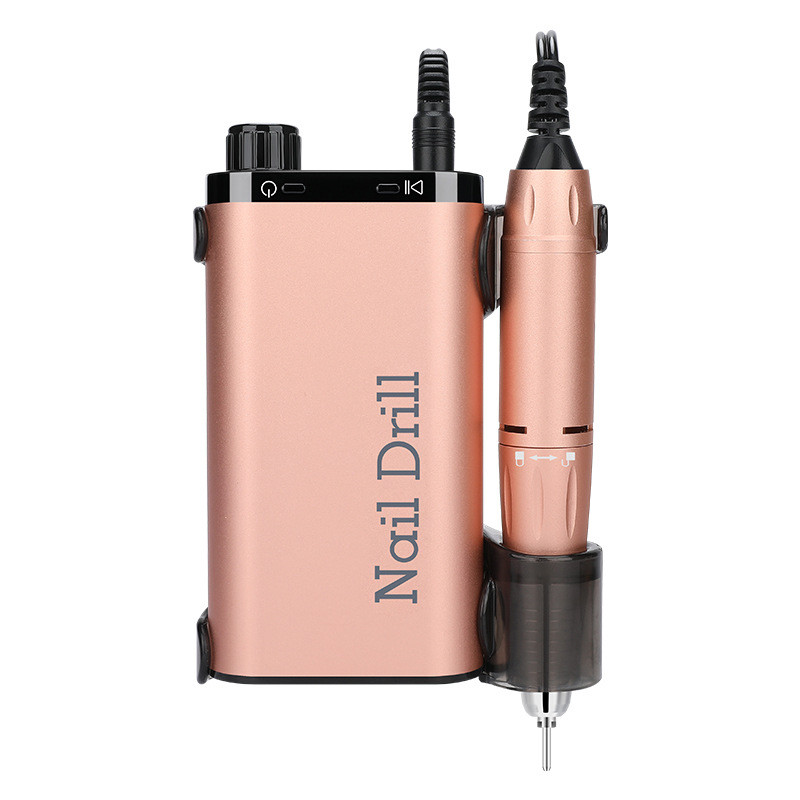
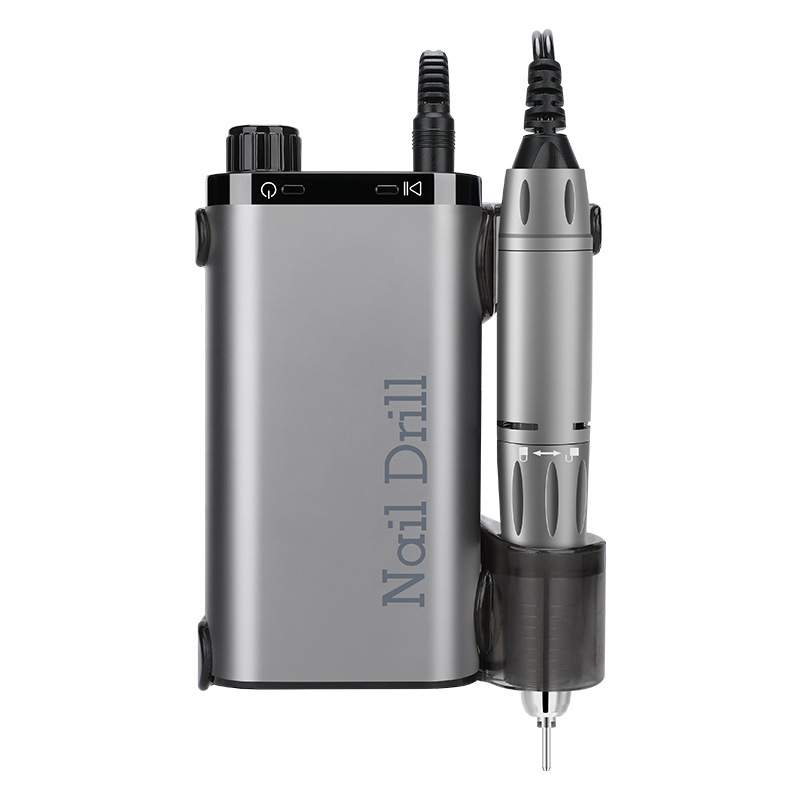
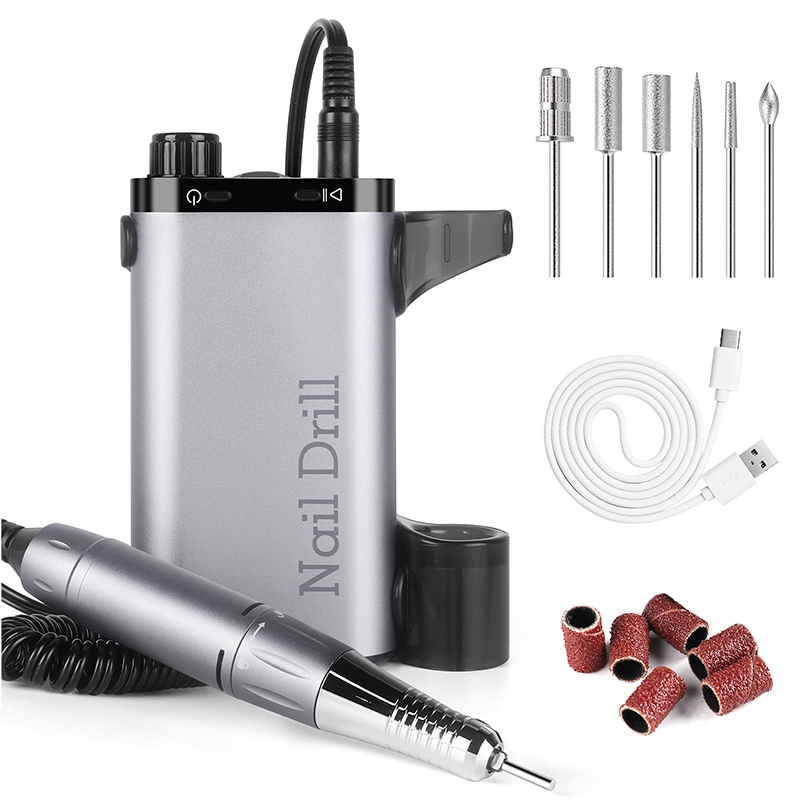
Quiet Professional Nail Drill Low Noise Salon Tool
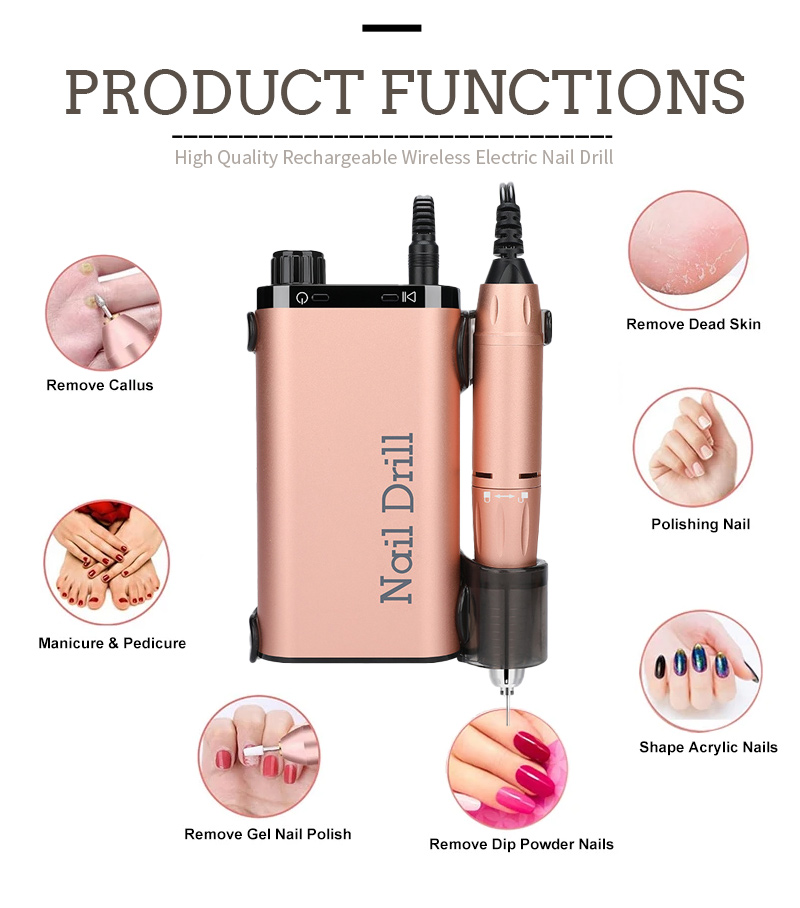
RUINA Quiet Professional Nail Drill Low Noise Salon Tool delivers powerful, precise filing with barely a whisper, so you can shape, smooth, and perfect nails anytime without disturbing anyone nearby. Its advanced sound-dampening motor and anti-vibration technology ensure smooth, comfortable handling, while adjustable speeds and durable titanium bits tackle acrylics, gels, and natural nails with consistent accuracy. Ideal for late-night home users, busy salon professionals, or gifting to friends who value peaceful self-care, this tool turns any space into a serene grooming station. No more loud, disruptive machines or rushed appointments—just calm, focused results that rival any high-end salon. Unlike standard drills, our model features extra-quiet operation, a lightweight ergonomic body, and quick-change head design for effortless bit swaps. Whether perfecting a client’s set or enjoying a quiet evening manicure, users experience professional-grade performance without the noise. RUINA redefines quiet excellence—reliable, gentle, and impeccably effective. Enjoy beautiful nails in total tranquility.
Send Inquiry
Product Description
The Acoustic Engineering Standard for the Quiet Professional Nail Drill Low Noise Salon Tool
In the professional salon environment, acoustic comfort is as critical as performance. Prolonged exposure to high-frequency drilling noise contributes to technician fatigue, client anxiety, and long-term hearing strain. The Quiet Professional Nail Drill Low Noise Salon Tool represents a paradigm shift in equipment engineering, where advanced motor design, precision balancing, and vibration-dampening materials converge to deliver salon-grade power without the disruptive decibel levels. Understanding the technical specifications that govern noise reduction is essential for salon owners and technicians who prioritize both health and service quality.
Core Technical Specifications and Acoustic Performance Metrics
The Quiet Professional Nail Drill Low Noise Salon Tool is defined by its noise suppression engineering, motor efficiency, and torque delivery. The following table compares key parameters found in standard professional drills versus advanced low-noise systems.
| Parameter | Standard Professional Drill | Quiet Low-Noise Salon Tool | Technical Insight |
| Operational Noise Level | 55 – 70 dB | 35 – 45 dB | Noise reduction of 20–25 dB is achieved through brushless motors and acoustic dampening . |
| Maximum RPM | 30,000 – 35,000 RPM | 35,000 – 45,000 RPM | Higher RPM with lower noise indicates superior bearing quality and rotor balance . |
| Motor Type | Brushed DC Motor | High-Torque Brushless / Coreless Motor | Brushless motors eliminate brush friction, a primary source of mechanical noise . |
| Torque Output | 3.0 – 3.5 N·cm | 3.5 – 4.5 N·cm | Higher torque at low RPM reduces stalling, which generates disruptive vibration noise . |
| Vibration Level | Moderate to High | ≤ 0.5 m/s² (Ultra-Low) | Precision-balanced handpieces minimize harmonic vibration and chatter . |
| Handpiece Weight | 110g – 150g | 65g – 95g | Lighter handpieces reduce operator fatigue and improve control, reducing accidental noise from bit chatter . |
| Bearing Type | Standard Steel Bearings | Ceramic / Precision Sealed Bearings | Ceramic bearings run cooler and with less friction, significantly lowering acoustic output . |
| Speed Control | Variable Dial | Micro-Stepped Variable with LCD Display | Precision speed control allows the technician to find the quietest operational RPM for each bit . |
| Power Source | Corded (AC) | Corded / Cordless (Lithium-ion) | Cordless models with advanced battery management maintain consistent power without noise fluctuations . |
| Safety Features | Overheat Protection | Overheat Protection, Auto-Stall Detection, Soft-Start | Soft-start eliminates the sudden loud whine of initial motor engagement . |
| Noise Frequency Spectrum | Broadband (High-Frequency Peaks) | Balanced (Low-Frequency Dominant) | Low-frequency noise is less fatiguing to the human ear than high-frequency squeal . |
Detailed Acoustic Engineering Analysis
Sources of Noise in Nail Drills
To understand the Quiet Professional Nail Drill Low Noise Salon Tool, one must first identify the primary sources of noise in conventional units. The three main contributors are:
Motor Brush Friction: Brushed DC motors generate mechanical noise as the carbon brushes slide against the commutator. This creates a high-frequency whine that is particularly fatiguing.
Rotor Imbalance: Any imperfection in the rotor's mass distribution creates harmonic vibration, which translates directly to audible noise and transmitted vibration through the handpiece.
Bearing Chatter: Low-quality bearings develop play over time, causing the spindle to wobble microscopically. This creates a rattling or grinding noise, especially at high speeds.
Noise Reduction Technologies
Premium quiet salon tools address each source through specific engineering solutions:
Brushless Motor Design: By eliminating the mechanical brush-commutator interface, brushless motors remove the primary source of high-frequency whine. The electronic commutation is nearly silent, with only the sound of the rotor and airflow remaining.
Dynamic Balancing: Each handpiece rotor is dynamically balanced at multiple points across the speed range. This ensures that vibration nodes are minimized, reducing both audible noise and hand fatigue.
Precision Ceramic Bearings: Ceramic hybrid bearings (ceramic balls with steel races) offer lower friction coefficients than standard steel bearings. They generate less heat and significantly less acoustic noise, while also extending service life.
Vibration-Dampening Housing: The handpiece housing incorporates elastomeric gaskets and internal dampening mounts that absorb residual vibration before it can radiate as sound.
The Acoustic Spectrum and Technician Fatigue
The human ear is more sensitive to high-frequency sounds (2,000 – 5,000 Hz) than to lower frequencies. Standard drills often produce sharp peaks in this range, which cause rapid auditory fatigue and contribute to the "drill whine" that stresses both technician and client. Quiet professional tools are engineered to produce a more balanced frequency spectrum, with dominant energy in the lower frequencies (500 – 1,500 Hz). This "bassy" sound is perceived as softer and less intrusive, even at the same measured decibel level.
Frequently Asked Questions (FAQ)
Q: How do I measure and verify the noise level of my Quiet Professional Nail Drill Low Noise Salon Tool?
A: Noise levels are measured in decibels (dB) using a sound level meter, typically set to the A-weighting scale (dB(A)) which approximates human hearing sensitivity. To verify the noise level of your Quiet Professional Nail Drill, you should perform the measurement under standardized conditions: place the sound level meter at a fixed distance of 30 centimeters (approximately 12 inches) from the handpiece, positioned at the operator's ear level . Run the drill at its maximum rated speed without any bit attached (to eliminate the noise of the bit cutting) and record the steady-state reading . Professional quiet tools should register between 35 and 45 dB(A) under these conditions . For comparison, a quiet library measures approximately 40 dB, while a normal conversation measures 60 dB. Be aware that attaching a bit and applying pressure to a nail will increase the reading due to friction and cutting noise—this is normal, but the base motor noise should remain low .
Q: What specific maintenance practices preserve the low-noise performance of this tool?
A: The low-noise engineering of your Quiet Professional Nail Drill relies on the precision of its internal components. To preserve this performance, you must follow a strict maintenance protocol. The most critical area is the collet and spindle—acrylic dust and debris accumulate here and act as an abrasive, gradually degrading the bearing surfaces and introducing noise . After each day of use, remove the bit and use compressed air to blow out the collet area, clearing any trapped dust . Do not use oil or lubricants in the collet unless specifically recommended by the manufacturer, as excess oil attracts dust and accelerates wear . The ceramic bearings are sealed and generally maintenance-free, but they have a finite lifespan (typically 2–3 years of heavy professional use) . If you notice a persistent grinding or whining noise that is not resolved by cleaning, the bearings likely need professional replacement . Finally, always store the handpiece in a dust-free case to prevent environmental contaminants from entering the motor housing .
Q: Does a higher maximum RPM always mean more noise, even in a quiet tool?
A: Not necessarily. The relationship between RPM and noise is not linear; it is dependent on the quality of the engineering. In a standard, poorly balanced drill, increasing the speed will significantly increase both vibration and audible noise . However, in a well-engineered Quiet Professional Nail Drill, the rotor and bearings are precision-balanced to such a high standard that the noise increase with speed is minimal . The handpiece is designed to operate quietly across its entire RPM range. That said, there is a physical limit—the sound of air turbulence generated by the spinning bit and the friction of the bit against the nail will always increase with speed . Therefore, while the motor remains quiet, the cutting noise will rise. The advantage of a quiet motor is that you do not have to work at a lower speed to preserve your hearing, allowing you to use the full RPM range for efficient acrylic removal without the auditory penalty .
Best Practices for Quiet Operation
To maintain the acoustic performance of your Quiet Professional Nail Drill Low Noise Salon Tool, implement the following protocols:
Regular Cleaning: Use compressed air to clear dust from the collet and handpiece vents after each shift. Dust accumulation is the primary cause of increasing noise over time.
Quality Bits: Use only high-quality, balanced bits. Poorly manufactured bits have off-center shanks that create wobble, generating vibration and noise regardless of the handpiece quality.
Correct Speed for Bit: Operating a bit at an inappropriate speed generates excessive friction noise and chatter. Match the RPM to the bit's recommended range.
Lubrication: If your handpiece has lubrication points, use only the recommended oil sparingly. Over-lubrication attracts dust.
Monitor for Changes: Any sudden increase in noise or vibration indicates a developing mechanical issue. Address it immediately to prevent cascading damage to the bearings and motor.
Store Securely: Protect the handpiece from impacts. Dropping the tool can unbalance the rotor, permanently increasing noise levels.
Hot Tags: Quiet Professional Nail Drill Low Noise Salon Tool, China, Manufacturers, Suppliers, Factory, Made in China, Customized, In Stock, Quality
Related Categories
Send Inquiry
Please feel free to fill your inquiry in the form below. We will reply you in 24 hours.
Related Products
 Rechargeable Cordless Nail Drill Set Professional 45w 40000rpm
 Rechargeable Cordless Nail Drill Machine Powerful 45w 40000rpm
 Rechargeable Nail Drill Set With Powerful Handpiece 45w 35000rpm
 Rechargeable Nail Drill Set Machine 45w 35000rpm
 Rechargeable Cordless Nail Drill Set Near Me USB 45w 35000rpm
 Rechargeable Nail Drill Set Nail Drill On Toes Fingers 35w 35000rpm



X
We use cookies to offer you a better browsing experience, analyze site traffic and personalize content. By using this site, you agree to our use of cookies.
Privacy Policy